
The power of imbuing objects with symbolism
Let’s paint a picture… you’ve done your homework, you’ve finished that self-help book, you’ve memorized some new healthy habits to try, and you’ve been nailing it in practice—breathing exercises, mantras, stress-relief techniques—and you’re ready to stride out into your week, feeling confident and hopeful.
But wait! As soon as that first challenging moment hits—as soon as theory meets reality—what happens? When you’re ready to leave the house and your youngest has inexplicably removed all their clothes, or your boss drops the bombshell that your project deadline has been cut in half, or you’re at the checkout and you realise you’ve forgotten your wallet—all that preparation can fly right straight out the window. Sound familiar?
Unfortunately, it can happen to all of us. In those high-pressure moments, we often fall back into old, and well-established, patterns of behaviour, even when we know better. That’s why we can read self-help books that seems to make perfect sense, and yet struggle to enact any of their advice. And that’s okay, because we’re all human, and this is a long road we’re on. But it’s exactly this kind of situation where we need something in our environment to bring us back to our best intentions, to prod our memories and remind us of the kind of person we want to be.
That’s where figurines, totems, jewellery and other small objects can come in handy—how you can set up simple, subtle reminders in your surroundings to help you stay on track, no matter what life throws your way. Let’s take a look at why these devices can be so effective…
In my Stress-Buster Programme, I encourage people to identify a key stressor in their life and make just one small change to address it. Instead of overhauling everything at once (which rarely works), we focus on forming one new habit at a time. It takes about two to three weeks for a habit to settle in, but even then, we all need reminders.
One of the most effective ways I’ve found is using small figurines that represent the qualities I want to develop. It might sound a little unorthodox, but it’s been a real game-changer for me.
The first time I tried this, I was sixteen. I picked up a small, dull brass skull from a craft fair. I first saw it on a Sunday outing, but I had no money, but something about it spoke to me. I felt compelled to take the 40-minute bus ride on my next day off and return to the craft fair, hoping it was still there. Thankfully, there it was, still sitting at the stall. To my teenaged mind, it seemed steeped in symbolism.
At the time, I was determined to dedicate my life to learning, and utilizing my mind (which I still am!), and that little skull—symbolizing intellect and deep thought—became a powerful reminder of that commitment. Even now, when I glance at it, I think of the incredible potential within the human mind and my own commitment to growth.
Years later, when I became interested in philosophy, I found a small figurine of a Chinese scholar, about four inches tall. He still sits on my bookshelf today, a quiet presence reminding me to cultivate wisdom, tolerance, and insight. Since then, I’ve collected a few figures depicting meditation, and I even built a miniature LEGO diorama of an explorer reaching the summit of a snowy mountain—my personal symbol of perseverance and determination.
And they really do work wonders. Even after years of having them, whenever I see these figures, they bring me back to the values and habits I want to reinforce. And if stress tries to pull me off track, they’re there as gentle nudges, reminding me of where I want to be.
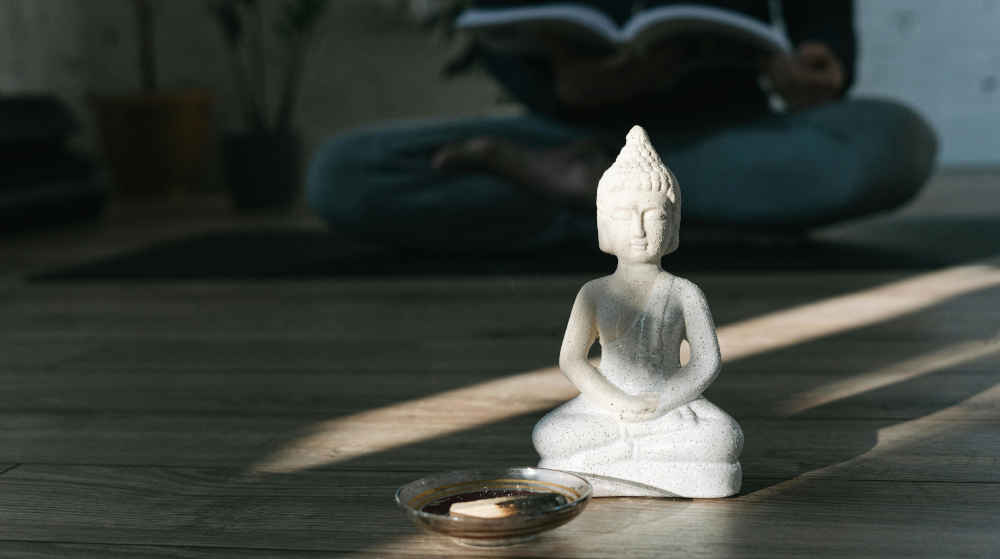
My most recent acquisition was a small, white Buddha figurine, just two inches tall. I found it in a little shop selling incense and gemstones, and as soon as I saw it, I knew it was exactly what I needed. At the time, I was juggling a busy family life, a loved one’s terminal illness, and an overwhelming schedule. Stress and anxiety were becoming daily battles, and I was struggling to remember my mindfulness techniques when I needed them most.
This small, serene figure became my anchor. Whenever my eyes landed on it, I was reminded to pause, breathe, and bring myself back to mindfulness. In the heat of a stressful moment, it helped me regain control before emotions spiralled out of control.
Unlike a picture or a screensaver—which can fade into the background after a while—a figurine is a real, three-dimensional object. It exists in your space, catching the light differently at different times of day, drawing your attention in new ways. We tend to assign personality and significance to physical objects in a way that’s harder to do with images. And the best part? It’s portable. I can move my Buddha to different rooms, placing it where I need that extra reminder most.
Intentions are easy to lose track of. You might set a New Year’s resolution or a personal goal, but if it only exists as a thought, it can easily slip away amidst the chaos of daily life. When you give that intention a tangible form, however—something solid, something visible—you dramatically increase your chances of sticking with it.
For me, figurines have become essential tools for personal growth. I also use symbolic jewellery, like a pendant I wear, as a reminder of a particular promise I made to myself. I have worn that pendant, every day, for ten years now—and every morning, as I stare into the bathroom mirror, my eye catches sight of it, and my promise is renewed.
So if you want to set yourself up for success, consider this simple but powerful method. Find a small object that represents your goal, your values, or the change you want to make. Place it where you’ll see it often. Let it become a quiet, steady presence in your life, gently steering you back toward the person you want to be.
Try it out, and let me know how it goes.


Leave a Reply