
Why science says listening to the quieter half of your consciousness is so important.
Who are you, really? Who is the self that is currently reading these words (and hopefully thinking complimentary things about my informative newsletter!)? One way to answer this question is to look at the structure of the brain.
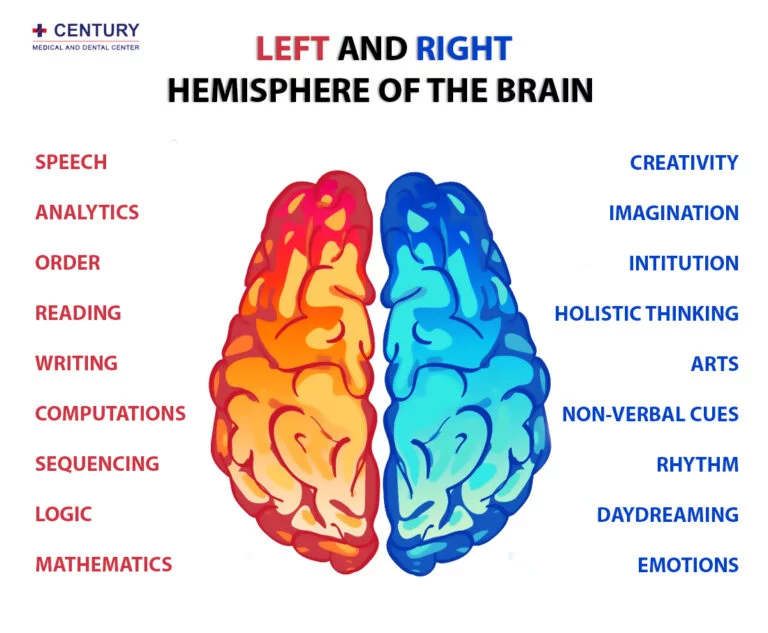
Our brains are split into two hemispheres—left and right—connected by only a few nerve bundles, the corpus callosum. The left hemisphere is language-driven, logical, and outward-facing. It forms the voice in your head, narrating your thoughts, putting intentions and concepts into words, and shaping your spoken self. If you’re like me, you might often see this voice as being the seat of your conscious self, but you’d be wrong. The right hemisphere—quieter, creative, more emotional—is just as vital, and just as conscious. It is the silent partner that’s often demoted to watching on from the sidelines as we stumble along through life.
The right side of the brain recognises faces, reads feelings in others, intuits, and visualises. It doesn’t use language the way the left does. It feels. It daydreams. It is the seat of imagination and emotional intelligence. And while it may not be verbose, it contributes just as much to who you are.
The trouble is, in a world that prioritises speech, writing, logic, computer coding and mathematics, the left hemisphere tends to dominate in many areas of our life. The verbal mind often speaks on behalf of the whole, even when it doesn’t fully understand the complexities of the situation that the other half can intuit. After all, the corpus callosum forms a kind of bottle-neck, throttling communication between the two halves. Sometimes, in stressful situations, we are required to reply or act before the right side of the brain has had a chance to contribute to the process.
In split-brain patients (those whose hemispheres have been surgically separated, to treat conditions such as extreme epilepsy), fascinating studies show that each hemisphere continues to function independently, with its own perceptions and goals. In essence, when the brain is split in half, two separate consciousnesses emerge, each with their own strengths, capabilities, and even political opinions.
In one such experiment, the right hemisphere was shown an image of an egg (by revealing the image to only one eye). The subjects—speaking from the left hemisphere—claimed to see nothing. Yet the hand controlled by their right hemisphere would quietly reach for an egg from an array of objects. When asked why, the verbal mind would fabricate a rationale that seemed to make sense—“it was a lucky guess”, or “I had an egg for breakfast”—when, in fact, it no idea where the impulse really came from. Which leads me to ask:
Subscribe to get access
Read more of this content when you subscribe today.

Leave a Reply