
Hi, I’m Matthew! And welcome to this weeks’ With Meaning newsletter about mindfulness and how to find meaning in modern life.
I’m so happy that spring seems to be in the air. The first delicate pink clouds of blossom are popping up here and there, and I noticed that the sycamore trees have beaten most other species by unfurling their lime-green leaves. I’ve been picking the yellow-est of yellow gorse flowers with my daughters so that we can capture a little of that gorgeous coconut fragrance by making some homemade ice-cream.
Combine this with the sunshine we’ve been having here on the island, and this last week has filled me with an excitement of what’s to come. Finally, winter seems to have been vanquished!
There’s lots of exciting things in this Wednesday’s edition, including a five-minute guided meditation where I whisk you away to an idyllic sea view on the edge of a cliff, an article on how to cement those well-intentioned good habits we all try and establish, and a breathing exercise to try. And more!
Thank you for your continued commitment…
A heartfelt thank you, as always, goes out to my paying members—your support means so much me, and allows me to continue bringing you weekly content that’s of value to you.
So let’s get started!
5-Minute Meditation:
Every day I try and fit in a 5-minute mindful meditation. Nothing complicated—I just try observe my surroundings, and really immerse myself in the moment. This week’s meditation came when I was out for a walk with my family along the coast where I live. Spring was tentatively showing signs of life, and I experienced a perfect 5 minutes, as we stopped half way up the hillside to catch our breath.
So let me take you with me to that place, so you too, can experience a little of the peace I felt. First, close your eyes for a moment, and take some deep, slow breaths. When you are ready, open them once more and I shall take you the peaceful place I found.
Don’t forget to take your time and read nice and slowly, allowing each image to seep into your mind. Try and experience your surroundings, and the sensations they might bring…
The blue of sea and sky
Blue. Blue is everywhere before you. The near cloudless sky above, with a handful of wandering wisps, and then the deeper, richer blue of the sea, stretching out into the infinite haze of the horizon.
You are sitting upon a dry, comfortable tussock, high up on a grassy hillside. The best seat in the house. The green is rolling away from you, steeply down toward the cliff below, where waves lap against unseen rocks.
The spring sunshine warms your face. When you blink, it illuminates your eyelids with a pink glow. You look out over the surface of the water. Thousands of square miles laid out like a rough-weave cloth. So much blue! So rich and deep, as far as you can see.
In patches, here and there, you pick out movement that seems more than just the foaming crest of a wave. There is life down there. Tiny flecks of white, undulating in a familiar rhythm—wings in flight.
Seabirds. Some bobbing on the water in groups, spread out like flotsam from an unseen shipwreck. Others are circling into the air, looking beneath the surface, waiting for a flash of sunlit scales to swoop down and pounce upon.
This area of sea is industrious. Gannets wheeling high, cormorants flying so low their wing-tips touch the waves. Gulls of all kinds, a scutch of guillemots. Maybe, you fantasise, even some puffins.
You stretch out your awareness and try to enter the mind of one particular bird, bobbing on the surface, about two miles out to sea. What is life like for you, today?—you ask. What are you feeling, out there in the blue, with only the sound of lapping water, and the quicksilver glints of sunshine balancing on the tips of the waves?
You release a satisfied sigh, and sink into a comfortable repose. You slow your breathing and let the calmness of the moment seep into your core. You feel a sense of utter peace. Time seems to stretch, as if all other parts of your life have melted away. Only here, only now exists.
Here, on your tussock, looking out to sea, and tasting the salty fragrance of its unbounded freedom—you feel content.
Why not try having a 5-minute mindful meditation too, wherever you are today? You don’t have to be anywhere spectacular. Simply stop everything for a while, take some slow, deep breaths, and begin to open up your awareness to what’s going on.
If you like, you can let me know how it goes. What did you experience or feel? I look forward from hearing all about it.
Main article: cementing good habits with physical prompts…
Let’s paint a picture… you’ve done your homework, you’ve finished that self-help book, you’ve memorized some new healthy habits to try, and you’ve been nailing it in practice—breathing exercises, mantras, stress-relief techniques—and you’re ready to stride out into your week, feeling confident and hopeful.
But wait! As soon as that first challenging moment hits—as soon as theory meets reality—what happens? When you’re ready to leave the house and your youngest has inexplicably removed all their clothes, or your boss drops the bombshell that your project deadline has been cut in half, or you’re at the checkout and you realise you’ve forgotten your wallet—all that preparation can fly right straight out the window. Sound familiar?
Unfortunately, it can happen to all of us. In those high-pressure moments, we often fall back into old, and well-established, patterns of behaviour, even when we know better. That’s why we can read self-help books that seems to make perfect sense, and yet struggle to enact any of their advice. And that’s okay, because we’re all human, and this is a long road we’re on. But it’s exactly this kind of situation where we need something in our environment to bring us back to our best intentions, to prod our memories and remind us of the kind of person we want to be.
That’s where figurines, totems, jewellery and other small objects can come in handy—how you can set up simple, subtle reminders in your surroundings to help you stay on track, no matter what life throws your way. Let’s take a look at why these devices can be so effective…
In my Stress-Buster Programme, I encourage people to identify a key stressor in their life and make just one small change to address it. Instead of overhauling everything at once (which rarely works), we focus on forming one new habit at a time. It takes about two to three weeks for a habit to settle in, but even then, we all need reminders.
One of the most effective ways I’ve found is using small figurines that represent the qualities I want to develop. It might sound a little unorthodox, but it’s been a real game-changer for me.
The first time I tried this, I was sixteen. I picked up a small, dull brass skull from a craft fair. I first saw it on a Sunday outing, but I had no money, but something about it spoke to me. I felt compelled to take the 40-minute bus ride on my next day off and return to the craft fair, hoping it was still there. Thankfully, there it was, still sitting at the stall. To my teenaged mind, it seemed steeped in symbolism.
At the time, I was determined to dedicate my life to learning, and utilizing my mind (which I still am!), and that little skull—symbolizing intellect and deep thought—became a powerful reminder of that commitment. Even now, when I glance at it, I think of the incredible potential within the human mind and my own commitment to growth.
Years later, when I became interested in philosophy, I found a small figurine of a Chinese scholar, about four inches tall. He still sits on my bookshelf today, a quiet presence reminding me to cultivate wisdom, tolerance, and insight. Since then, I’ve collected a few figures depicting meditation, and I even built a miniature LEGO diorama of an explorer reaching the summit of a snowy mountain—my personal symbol of perseverance and determination.
And they really do work wonders. Even after years of having them, whenever I see these figures, they bring me back to the values and habits I want to reinforce. And if stress tries to pull me off track, they’re there as gentle nudges, reminding me of where I want to be.

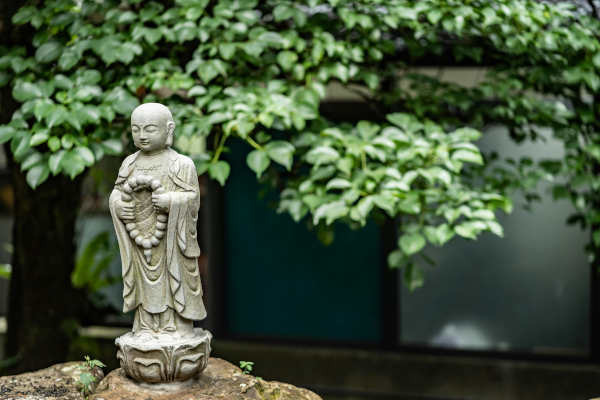
My most recent acquisition was a small, white Buddha figurine, just two inches tall. I found it in a little shop selling incense and gemstones, and as soon as I saw it, I knew it was exactly what I needed. At the time, I was juggling a busy family life, a loved one’s terminal illness, and an overwhelming schedule. Stress and anxiety were becoming daily battles, and I was struggling to remember my mindfulness techniques when I needed them most.
This small, serene figure became my anchor. Whenever my eyes landed on it, I was reminded to pause, breathe, and bring myself back to mindfulness. In the heat of a stressful moment, it helped me regain control before emotions spiralled out of control.
Unlike a picture or a screensaver—which can fade into the background after a while—a figurine is a real, three-dimensional object. It exists in your space, catching the light differently at different times of day, drawing your attention in new ways. We tend to assign personality and significance to physical objects in a way that’s harder to do with images. And the best part? It’s portable. I can move my Buddha to different rooms, placing it where I need that extra reminder most.
Intentions are easy to lose track of. You might set a New Year’s resolution or a personal goal, but if it only exists as a thought, it can easily slip away amidst the chaos of daily life. When you give that intention a tangible form, however—something solid, something visible—you dramatically increase your chances of sticking with it.
For me, figurines have become essential tools for personal growth. I also use symbolic jewellery, like a pendant I wear, as a reminder of a particular promise I made to myself. I have worn that pendant, every day, for ten years now—and every morning, as I stare into the bathroom mirror, my eye catches sight of it, and my promise is renewed.
So if you want to set yourself up for success, consider this simple but powerful method. Find a small object that represents your goal, your values, or the change you want to make. Place it where you’ll see it often. Let it become a quiet, steady presence in your life, gently steering you back toward the person you want to be.
Try it out, and let me know how it goes.
Book review
This week, I’ve been reading Influence: The Psychology of Persuasion by Robert B. Cialdini. It’s a classic book on psychology, though I only just stumbled upon it myself, and it details seven major ways in which we humans cannot help but be influenced by society around us. Such as how we respond to authority, how likely we are to follow crowd behaviour, the instinctive need to meet someone halfway in everyday negotiations. Shaping all areas of our day-to-day lives, these seven triggers explain a lot of my behavioural habits and where much of my angst and anxiety stems from.

For instance, the idea of reciprocity in social relationships—as in, if you do me a favour, then I shall instinctively feel indebted to you, and feel increasingly uncomfortable until that debt has been repaid.
This is a great trait for a social species, because it means that we are more inclined to offer up, rather than hoard, our own time or resources to aid another person. Confident there is a good chance that the giver shall receive something back at some point in the future, it oils the wheels of cooperation and community.
Unfortunately, so strong is the urge to repay such debts, that this trigger can often get us into socially awkward pickles.
I’ve lost count of how many times I have regretted saying yes to something I didn’t want to do all because someone—consciously or not—was pushing all the right psychological buttons to make it near impossible for me to refuse.
So if you too find yourself standing on a runway in torrential rain, on the verge of a heart attack, trying to pull a 100-seater air-plane for charity, 200 yards, with only seven other people, wondering how on earth you got yourself into this situation—then this book is for you.
And if you’re anything like me, it will be because a friend came back from the the shop one day brandishing a chocolate bar you hadn’t asked for, but felt it was only polite to eat, and then having eaten it, felt further obliged to repay that debt by agreeing to the first favour they ask in return!
Little acts of kindness
I went to watch my daughter in her Youth Orchestra concert the other night. It was at the cathedral, and the acoustics were amazing. It was a lovely occasion, and I was moved to tears a couple of times. However, in my rush to congratulate my daughter after the performance, I left my glasses under my seat.
It was only at bedtime that I realised my glasses were missing. They’re my only pair and I need them to drive. So, early next morning, I traipsed back up to the cathedral in the hopes of finding them before the first mass of the day.
Unfortunately, all the seats had been cleared away, the night before, and my glasses were nowhere to be seen. Thankfully, a kind woman was setting up, and took ten minutes out of her day to help me hunt for them. She took me into the back rooms, and into the side rooms, we hunted around the edges of the huge space, on all the tables and displays, in case someone had simply put them to one side.
Finally, as I was beginning to lose heart, she found a plastic bin full of ownerless drinks bottles and woolly hats. There, amongst the detritus, were my glasses.
The woman didn’t have to go out of her way to help, and without it, I would not have found them. One of the most generous things we can give one another is our time, and through this quiet act of kindness, she made my day. So thank you. You made the world a better place.
Excerpt from my Mindfulness Course:
Each week I include an excerpt from one of my online courses that area available for my premium subscribers. This week’s excerpt is from my Mindfulness Made Easy course, and it’s about how we can reduce stress levels with the simple act of breathing…
Breaking the stress cycle before it takes over
Very often, when we face stressful situations, our breathing becomes fast and shallow, our pulse quickens and our blood pressure becomes elevated. Cortisol and adrenalin courses through our veins, and we might find we become shaky or more frantic with our movements and mannerisms. We might frown or stretch our cranial muscles, causing ourselves to develop headaches or migraines. And finally, our very thoughts become harried and uncoordinated as we nudge ourselves along the spectrum between calmness and panic.
So before we can get to the point where we can practice mindful thinking, we need to halt this physical runaway-train effect.

Resetting our breathing with some deep breaths
Here’s one of the simplest techniques you can try, and one that can be performed almost anywhere. Very often, in tense situations, or even when we are toiling at a computer workstation, we forget to breath. We breath out, and then simply forget to breath in again, sometimes for significant periods. When we do inhale, they often are short, shallow intakes. This is one of the physiological stepping-stones that triggers our stress hormones to kick in, taking us one step further towards a state of panic or distress. So when you notice yourself beginning to feel antsy, if you hear yourself snapping at someone or crying out in frustration over yet another thing that’s gone wrong, then stop—take a long, deep breath…
Try to enjoy this long inhale, like when you take a long cold drink on a hot day. Savour it. Fill all your lungs and hold onto that life-giving air for a second or too, before gently exhaling, and blowing out all your tension.
As you exhale, do it at a slow, unhurried pace. Allow yourself to feel your muscles relax on this out breath. If you can, you can try stretching your arms, or legs, or neck muscles, on the in-breath, to really loosen those little knots. As you exhale, and release yourself from the stretch, let your muscles and frame relax into a softer, looser posture. You don’t need to slouch—just let go of that unneeded tension.
If you like, you can repeat the process until you begin to break the cycle of escalation towards fight-or-flight.
Science-backed ways to be happier…
Get science-backed, life-improving ideas sent to you twice a week. Covering stress, happiness, health & finding meaning in the modern world.
Subscribe to my newsletter
Media recommendation
Ever been stuck indoors and longed to be out in nature? This week’s media recommendation allows you to create a virtual window onto a azure lake in the Swiss Alps.
Have it on in the background to lighten up a rainy day, or listen to it with your headphones as you do your work. Enjoy!
Quote
I love this idea, it encapsulates the power of mindfulness so well. Learning to be more aware of the ever-unfolding moment, in all its complexities, allows us to experience the good things that are happening, right now…
“Be happy for this moment. This moment is your life.”
Omar Khayyam
Until next time
That’s it for this week! I hope you enjoyed this issue and I’ll see you again next time. Don’t forget to leave a reply if there’s anything you’d like to share. And speaking of sharing, if there’s someone you know who you think could benefit from reading my mindfulness newsletter, please feel free to forward this to them!
See you next time.
Matthew James.

Leave a Reply