
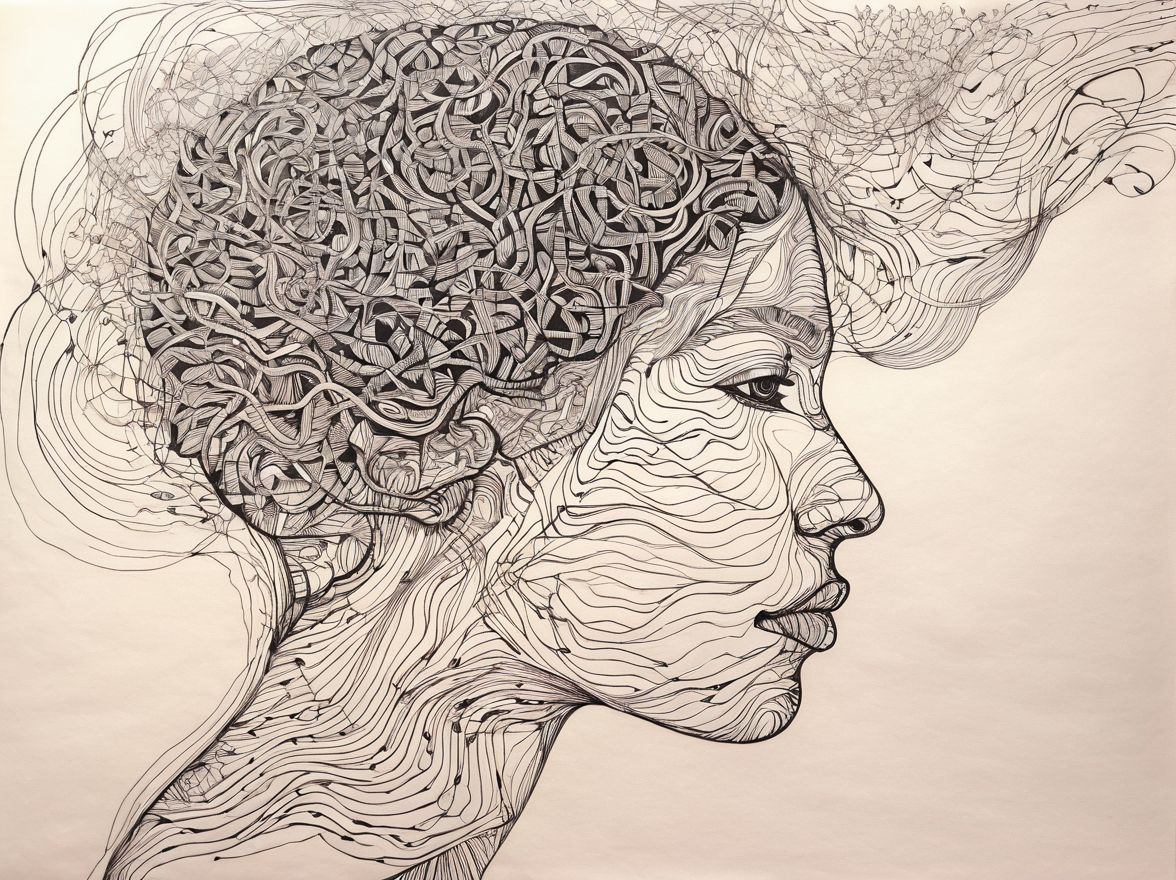
In Plato’s Republic, we are presented with an allegory: a group of cave-dwellers who live, trapped in their dark cavern, unable to see the real world outside. But they can perceive the shadows on the wall, cast by objects and people as they pass by the entrance to the cave. From these two-dimensional, imperfect shadows, the cave-dwellers must deduce the nature of reality. Thus, their grasp of existence is limited by the few facts they can glean by the shadows, and by the small sample of phenomena that happen to pass by the entrance.
From this story, Plato put forward his theory of Forms, whereby there is one world—imperfect and limited, the world where humans live out their lives—and another realm—the realm of Forms, where the ideal version of all things reside.
In the imperfect world, there are, for example, many types of object that fall into the same class—such as a chair. On Earth there are chairs of all kinds, some large, some small, some padded and comfortable and others rickety and hard. But in Plato’s theory of Forms, he posited that there is another realm, that humans cannot perceive directly—much like how we think of the realm of pure mathematics—where the perfect versions of everything exist. The “ideal chair”, for example, or the ideal sphere. We humans, then, must be contented with imperfect copies of those perfect forms, that exist somewhere on a different plane.
Applying Plato to Living With Meaning
Plato was making the point that most of humanity is content with how things appear to be, rather than how they actually are. This parable has been interpreted throughout the ages in many different ways, depending on the society and prevailing thought of the time. When it comes to Living With Meaning we can take this parable and adapt it in the following way:
The realm of Forms, rather than some ethereal plane of existence, is actually the real, objective world—the external world, of photons and electrons, typhoons, tectonic plates and distant cities—and the cave is where we humans reside—not in the external world, but in the internal world inside our minds, where we each construct an imperfect model of the universe from the scant information that passes our awareness. And we weave our dreams, and explore our fantasies and make plans and and form opinions and construe comments and smell the scent of unknown flowers.
Naturally, with our imperfect senses and patchy knowledge, and limited scientific understanding, and inaccurate instruments, we can never truly know the real, objective world. We can only ever glean parts of it, from the shadows cast on the walls of our retinas, or the vibrations in our eardrums, or the words passed along from one person to the next, about news and discoveries, all tinted with interpretation and misinterpretation. And in this week’s lesson, we will explore this notion in more depth, leading us to recognise the importance of keeping an open mind, especially in how it pertains to building a personal belief system that really works.
The true nature of external reality is always just out of reach, like the stalactites that line the roof of a giant cavern, and drip upon those who look at them. When we experience new phenomena, or accumulate new facts, it is as if we have caught a handful of these droplets, and try to behold the cavern from the reflection in the pool we have fashioned in our hands.
Sometimes, when the inner and outer worlds come into conflict with each other, we discover that some of our beliefs don’t add up. This outer kingdom, like Plato’s realm of Forms, is always the world that must take precedence, unless of course, we refuse to continue to align our internal model with that of objective existence. At which point, our personal reality decouples from the outside world and great problems can start to arise. We all know people who, in some way, live in a world of denial.
In light of this, choosing to keep your mind open to being disproved or changed is critical if we are to live honestly and authentically. This is because there is very little in life upon which we can be 100% confident on. No matter how closely we pay attention, how carefully we measure things or curate our facts, there are always inaccuracies. Our senses can be fooled, and our memory can be patchy, and the news we gather from other people can be conflicting and messy.
Even things we take for granted as unchangeable principles could, in theory, turn out to be inaccurate. Beliefs we’ve held for years can prove to be misguided, such as the misconception that sharks can smell blood from a mile away. Opinions from influencers, colleagues, and talking heads may sound plausible or reasonable, but that doesn’t mean that they are correct. In short, if we are to live meaningfully, and are serious about building a belief system that values truth, we must be honest about our limitations—specifically, the limitations of what we can know.
In truth, there’s no foolproof way to avoid misinformation or misguided beliefs.
Holding onto beliefs past their sell-by date
Every day, we cling to beliefs and opinions even as the world reveals their flaws, because, emotionally, we are not yet ready to give up on those parts of our internal world we are so attached to; and in doing so, we invite unnecessary suffering. Consider Dorothy, for example, who eats a certain brand of food in the belief that it has been proven to be healthy. It makes her feel happy to know that that she is looking after her body, and living healthily. Added to that, such “superfoods”, protein drinks or supplements can often be expensive, which only goes to raise the stakes, with regard to her judgement.
However, Dorothy might not be aware of the veracity of the science that supports the claims made by the companies producing such foods. Even when presented with damning evidence to the contrary, she may feel too invested to easily let go of her long-held belief. It may be easier to dismiss an unpalatable piece of evidence than to admit that she have wasted her money, made considerable sacrifices or lifestyle changes, all on something that was mis-sold or marketed unethically. It may be a major blow to Dorothy’s ego to find our that she has, essentially, been duped. And it might require the painful work involved in renovating and rebuilding her internal model, if she is to accept this new information.
This commitment to false beliefs can affect our relationships too. Eric suffers from low self-esteem, and holds onto the belief that he is inadequate or undeserving of respect—a belief born from painful experiences and memories in childhood, which have shaped his internal model, and thus how he expects others to treat him. And whilst those formative incidents may indeed have happened, it’s possible that their memories have been exaggerated over time. Those memories are still emotionally charged, and influence all kinds of situations in the present, but it does not follow that everyone he encounters views Eric like his abusers did, all those years ago. These convictions, then, shaping the way we form future relationships, can be wildly inaccurate, often damaging to our mental health and our current and future friendships or working relationships.
Similarly, Aiza often feels insecure and fearful about the chaos in our world, having consumed too much in the way of unsettling news. Political polarization, or controversy-seeking influencers exacerbate her feelings of unease. She feels her life is shaped by socio-economic forces outside her control, and so, in an effort to cope with this uncertainty, she may latch onto explanations that are superficial or simplified, but easy to understand, even if these explanations are not true. Sometimes, people may attribute societal problems to immigrants, for example, or some other scapegoat minority. At the extreme, we have conspiracy theories, which can help to give the powerless and disenfranchised a perceived modicum of empowerment—false though it is— through a feeling of being-in-the-know, a sense of satisfaction from being “in” on a secret that others have missed. But this, too, can be a trap.
In truth, there’s no foolproof way to avoid misinformation or misguided beliefs. This is why maintaining an open mind is essential. And to do this we must remain agnostic about things we cannot know for sure and be willing to detach our sense of self-worth when we discover we are wrong about something. Our perception of truth is always limited by our ability to sense, discern, measure, and interpret the world—and mistakes are inevitable. The key is to remain flexible, ready to adapt and refine our beliefs as new information comes to light. Being stuck in our ways only leads to frustration and upset.
A non-judgmental approach, therefore, is crucial. When we, or others, hold beliefs that turn out to be untrue, we must resist the temptation to judge. We must not think ourselves, or others, foolish for using the best information available at the time, even though it may have subsequently become outdated. The future will always bring us new information, and we should be gentle with ourselves when these revelations occur and we have to make alterations to the structure of our belief system.
The merits of embracing an agnostic approach
Agnosticism, as a general term, means to “not know”. It is often referred to purely in terms of a religious stance, but it can also be applied as a general philosophy. It could just as easily be called “I-don’t-knowism“. The very idea may seem abhorrent to people who are compelled to always feel in the right. But this might be said to be less a reflection on the soundness of the philosophy, and more on their own emotional make-up.
In its non-religious sense, agnosticism can be an effective starting point on a pathway toward knowledge—a constant, unabashed open-mindedness, paired with the understanding that our belief system is never truly complete. Perfect knowledge is unattainable, so we should not seek a world model that is black and white, filled with false certainties and convictions that will crumple at the first hint of conflicting evidence. But we can aim for a certain degree of workable accuracy, and a flexibility of thought that allows for growth and evolution. Taking an agnostic stance can often be the wisest approach, in a world where truth is never certain, and it gives us the best chance for a building robust set of beliefs.
Though Living With Meaning applies the concept of agnosticism in a broad sense, many people are most familiar with the specific application as it pertains to religion. Indeed, this is a useful example to understand its underlying principals. For this, we must consider the classic problem of the debate between theism and atheism: a theist believes steadfast in a higher power guiding the universe, while an atheist is convinced that the universe exists without such intervention. Both people are utterly convinced of their position, but they surely cannot both be correct.
An agnostic, however, acknowledges the reality that they indeed cannot know for sure, as such knowledge may be beyond the reach of our current capabilities or scientific understanding. Indeed claiming to know one way or the other could be considered presumptuous. So, an agnostic refrains from taking a definitive stance and remains content with not leaping to conclusions before discovering irrefutable evidence. Sometimes, not knowing something is okay, and preferable to claiming to know a thing when you do not.
Surprisingly, this doesn’t have to leave a gaping hole in your belief system; nor does it leave us floundering with confusion or hesitation. Instead, the unknown can become a tangible, acknowledged, even cherished part of life (what would life be like without mystery?), and a concrete variable which you can use in your philosophical equation. We must resist the urge to fill this gap with any convenient theory that crops up, just for the sake of completeness. Very often, our preconceptions and personal biases can colour such assumptions. In fact, one of the most valuable skills in life is the ability to say, “I don’t know.” It can be difficult to admit this as adults, but it is often the first step toward deepening our understanding, and allows us to build a more honest model of reality.
But surely, remaining agnostic cannot be practical in all circumstances. What about all those areas in which we are mostly or virtually certain, or where we are required to take a stance? What about where we are confident that it is either A or B, but certainly not D, C E or F? We must be able to factor in a level of confidence into our thinking. Simply saying “I don’t know” doesn’t work for every situation. What we need is a mechanism to deal with instances where you can legitimately say: “I probably know,” or “it’s either A or B.” This is where Quantum Mechanics can lend a hand…
Composite Belief
In embracing agnosticism, we can borrow from the world of quantum mechanics to form one of the most useful tools in the Living With Meaning toolkit—Composite Belief. In the counter-intuitive realm of quantum mechanics, subatomic particles such as electrons or photons don’t behave in the way we expect based on our everyday experiences. For instance, though these particles make up all the objects we encounter—including our own bodies—they can appear to be in two or more locations at once. And they can possess different, superimposed properties simultaneously. Wouldn’t it be nice if we could sometimes be in two locations at once!
One of the most famous and mind-bending ideas in quantum mechanics is wave-particle duality, which suggests that particles can act both like waves and like discrete particles, depending on how we observe them. This is something that scientists once believed impossible.
In the famous “Double Slit Experiment”, first performed by Thomas Young, particles are fired toward a viewing screen, where their collision will create a point of light. But before they reach the screen, they must first pass an opaque barrier, in which there are two, very narrow, slits. Thomas Young expected that most of the particles would hit the barrier, and some would pass through the slit. Since he expected the particles to behave like tiny cannonballs, he expected the pattern on the viewscreen to comprise of two patches of light, one for each slit, where particles passed through and continued in their straight line trajectory toward the screen.
Instead, and to his surprise, the particles seemed to pass through both slits at the same time, as if they exist in multiple places simultaneously, creating a distinctive ripple-like pattern on the screen. This was due to them behaving like waves, with their crests and troughs interfering with each other. It was called an interference pattern. However, when scientists, attempted to observe the particles directly in transit, to discern exactly what was going on, the particles seemed suddenly to “decide” to behave like solid particles once more, passing through one slit only, and thus creating the two-patch pattern on the screen that Thomas Young had initially expected. This suggests that simply observing or measuring a quantum system changes its behaviour—its reality. The question as to why this occurs has not yet been explained to everyone’s satisfaction.
So, in the first stage of the experiment, we have a mystery—an unknown—and that is the question “which slit are the particles travelling through?” In this first phase, we do not know this piece of knowledge, and as a result, reality takes on a different form—the particle literally goes through both slits at once, displaying a distinctive pattern of interference on the screen as a result. But if we perform the process again, and this time actively attempt to detect which slit each particle passes through—left slit or right slit—the super-imposed reality collapses into a single reality, and each particle transmutes to its singular form, simply travelling through the slit like any other classical projectile. In other words, when we deal with unknowns, sometimes, both possibilities can actually, really, exist, in superposition, all at the same time. That is, until we finally are able to learn more, at which point, the possibilities collapse, and our world changes.
This experiment went a long way toward demonstrating that it is impossible for us to know every piece of information about a particular system—that the more we learn about one property, the more uncertain we can become about another. This inherent level of uncertainty in reality was later quantified by Heisenberg’s “Uncertainty Principal”.
Schrödinger’s thought experiment concerning a cat helps to illustrate this further, describing the paradoxes of quantum mechanics at a larger, more familiar scale. Imagine a cat placed inside a sealed box with a radioactive atom, a Geiger counter, and a vial of poison. A stopwatch is started. If the radioactive atom decays during a set period—say five minutes—it will set off a chain reaction: first it will emit a particle of radiation. This particle would then trigger the Geiger counter, and the Geiger counter, modified appropriately, would then trigger the release of the poison. Thus, finally killing the cat inside the box. After the set time, the experiment ends.
On the other hand, if the atom doesn’t decay, the cat stays alive. After the set time, the Geiger counter is deactivated, and the experiment ends. Quantum mechanics tells us that, until we observe what has happened inside the box, both possibilities exist concurrently—the atom is in a superposition—both decayed and not decayed at the same time. Therefore, the cat is also in a superposition—both alive and dead—until we open the box and observe the outcome. While this scenario seems absurd, it demonstrates the peculiar nature of quantum reality: that particles (and, by extension, the cat) can exist in multiple states at once until we observe them. It is as if, once we observe the cat, we too are brought into its reality, and naturally continue along a particular path or timeline.
In a practical sense, macroscopic objects like cats cannot stay in a superposition state for very long, and almost instantly, decoherence brings the cat back into an either/or state because heat signatures, vibrations, sounds and other emissions cannot contain the secret of the cat’s fate, and so the rest of the universe quickly “observes” what has happened. But on the small scale, such “superpositions” do indeed occur, and can remain stable until an outside influence collapses it into one state or another. In a similar way, we can apply this to the world of ideas…
In the same way that Schrödinger’s cat can be said to be both dead and alive, our beliefs—especially those in the realm of ideas—can also exist in this dual state. For example, when pondering the existence of God, it’s fair to say that, without definitive proof either way, if we are to construct an honest model of the universe in our minds, God both exists and does not exist, at least until further evidence or personal revelation forces us to collapse that state into one concrete view or the other. In the external world, this question may remain unanswered for your entire life, perhaps forever—with theologians, atheists, scientists and philosophers never coming to agreement—so believing with certainty in one direction or the other may not be a rationally robust approach. And yet simply remaining on the fence may not satisfy us either.
You may certainly have a strong inclination one way or the other, and that is fine. In which case, you might assign a probability to each option: perhaps you believe that there’s an 80% chance that God exists, and 20% that she does not. Or perhaps vice versa. In either case, within the internal universe that runs inside your mind—that you have built up, one belief at a time throughout your life—there’s a metaphorical box labelled “Deity”. And inside this box, there is a god that is both alive and dead at the same time.
Over the years, that probability may shift, as new experiences or insights emerge—and that’s perfectly fine. No one expects you to have all the answers, all of the time. You don’t have to pick “yes” or “no”. In fact, an honest belief system is the one that knows when to say, “I don’t know.”
The Great and Mysterious Unknown is one of life’s most significant elements—one that I’ll explore further in a future lesson—inside your world model there will be countless little boxes and voids in which you can never tell what lies inside. Knowing how to work with such uncertainties is one of the core areas for finding meaning in life.
So what about things that we do know—for definite? Well, sure, there are plenty of things we can depend upon with near certainty. Tomorrow’s sunrise, for instance. There is no practical sense in fearing that the sun won’t rise tomorrow, because the probability of that happening is vanishingly small. Yes, we can conceive of some remote possibility where something celestially cataclysmic occurs during the night, but what good would it do to fret about this statistically insignificant possibility?
So we make plans for tomorrow, and the next day, and the next, banking on the sun rising. However, that same way of thinking can fool us into a false sense of security, because there are some possibilities that are not vanishingly small. Anyone who has ever listened to the news will have heard of countless ways in which, for some unlucky person, on some unlucky day, the sun did not rise for them. And, how might they have lived differently, had they known that that day was to be the day they would die? My own father banked on there being a happy retirement waiting for him, and opted to spend many healthy years deferring all those little joys in life, in exchange for working harder than he perhaps needed to—only to be cut down by a fatal illness weeks into his long-awaited retirement. That demonstrated a failing, within his internal world model, to fully represent the different possibilities that lay in wait for him.
Yes, it would be impossible to go through life acting like this may be our last day, but neither should we blindly act as if we are invincible or know what is definitely going to happen. Subtler, superimposed beliefs allow us to build contingencies into our planning. Perhaps a healthier outlook would have been for my father to see that it was likely, but not certain, that he would enjoy a long and happy retirement. Perhaps a superposition of 75% and 25%. In which case, this new dual possibility might project a different pattern onto his inner “screen”. Which might in turn lead him to reach slightly different decisions during his working years. He might have decided it was prudent to ring-fence more time for fun, for being with loved ones, for enjoying the now.
When 2 + 2 does not equal 4
Let’s take a look at another example how of ideas and reality don’t always match up. In this case, sometimes our internal calculations appear to be more accurate and precise than the real world. The statement “2 + 2 = 4”, for example, might seem like an unquestionable truth in mathematics, but when applied to real-world scenarios, the concept of “2” and “4” becomes more fluid and dependent on how we define our terms, or how accurately we measure things. Numbers in the abstract world of mathematics are idealized and precise, yet the physical world is often anything but.
For instance, consider the process of pouring 2 litres of liquid. If, for argument’s sake, our definition of accuracy is restricted to rounding to whole numbers, “2 litres” could be anywhere from 1.5 to 2.49999… litres, depending on the precision of the measurement. In such a case, “2 + 2” could equate to anything from 3 to 4.99999… litres. Higher mathematics complicates the issue further, showing that 2+2 is not always 4 in every case. Indeed, in this case, our internal model is simpler than the external world. In a practical sense, quantities can be approximate and context-dependent.
In truth, even if our scales are accurate to within 1 millilitre, no two servings would have exactly 4 litres. This may not, in every day use, sound important, but it is nonetheless true, and in some cases, such inaccuracies can add up to very important compound consequences. How often, for instance, do we round up to the nearest pound or dollar when we relate to someone how much we spent? Sometimes, we round up to the nearest hundred or even thousand, depending on context.
Our happy fantasies
Another example was brought to me by my daughter. We live on a small island, and one day my daughter asked me “how long is the coastline of our island?” I replied by saying that if we walked it, along all the beaches, we would probably have walked about 90 miles. But then she said: “Not the beaches, the coastline. The cliffs, the edge of the land.”
The coastline meanders in and out, so I said that someone would have to measure it with a metre-long measuring wheel to include all the undulations. I said it would be like measuring a long piece of fabric that had been folded or scrumpled up like a concertina. I took a stab at guessing the sinuosity index of the coastline, and estimated that the length would probably be about 90 × pi, which equals 282.7 miles.
My daughter then said “but if you used a centimetre-long measuring wheel, would you get the same answer?” I thought about this and realised that, no, you wouldn’t. A centimetre-wheel would allow me to weave in and out of undulations much smaller than a metre. Using this my estimate increased to in the region of 1000 miles. Finally, my daughter said: “What if you used a microscope to measure all the folds at the molecular level? Wouldn’t that be most accurate?”
I had to agree. And realised that because coastlines are fractal in nature, my estimate was way out. At this level, the circumference of the island would be up into the tens of thousands of miles. But even this was not the whole truth. Should I resolve my microscope to the atomic level, I might begin to discern that the quantum particles themselves were actually in more than one location at once, or had forms that were fuzzy and indistinct. This would present a whole new level of complication. And by the time I had finished measuring, some atoms would have eroded, and others might have been deposited. In truth, there was no way to accurately describe how long the coastline of my island was. It all depended on the frame of the question and the context.
What the previous two examples indicate is two-fold: (a), that we can never extract from the objective external world its quantities, measurements, facts, and properties without some level of uncertainty—that such things come baked in with an intractable inaccuracy, and thus information in general derived from reality must be inherently fuzzy. This, indeed is one of the key tenets of quantum physics—the Uncertainty Principal. And (b), that absolute precision is often not what we humans require in order to be satisfied. Knowing the true length of the coastline of my island (which will be inordinately large) tells me nothing useful. A much more useful level of accuracy would be my original figure of “90 miles as the person walks”. Whilst woefully inaccurate in an absolute sense, it nonetheless gives me usable information with which to build up a working internal model of my home island.
In other words, rather than chasing absolute truth, our minds are often more content to live inside an internal world that is only a blurry approximation of the external, objective world. In short, we each live within happy fantasies that cannot possibly reflect the absolute values of the outside kingdom, but nonetheless provide an optimal level of detail for our needs.
Reducing Anxiety and Worry
Very often in life, we focus on things that have a very small chance of occurring, and we allow our fears to get the better of us. Being able to form proper composite beliefs that reflect the true likelihood of different possibilities can help us reduce worry and anxiety, especially when we use these accurate composite beliefs to build our internal world model.
For example, Robert is taking a trip on an aeroplane. Robert doesn’t exactly have a phobia of flying but he naturally gets anxious and worries about things in general. He knows that the chance of being involved in a plane crash is less than one chance in a million, nonetheless, he finds that he is focusing on that miniscule chance and is beginning to feel anxious. The more that he allows this misaligned belief to shape the structure of his internal world, the more it will take root. The more he entertains this possibility, the more he explores all the ramifications, building whole new threads of his inner universe as a result.
In his internal world, he fast-forwards to the point where the plane crashes and imagines the horrific experience. He then moves further forward in time to picture the wider consequences. How his family will react, how his work will be left unfinished, how his goldfish will be left unfed. He moves back in time and thinks of all the things he should have done, to put his affairs in order. The more parts of his world that he builds with this misrepresented belief, the more he becomes certain that it is going to pass, and the more his anxiety grows. That is because, from his internal world perspective, he really is living in a world in which he is about to die.
When the plane eventually lands without a hitch, Robert has been through emotional turmoil. But now, to his surprise, he has survived. The external world is telling him that his internal world was incorrect after all. Now, instead of a fiery death, he is forced to rebuild his internal model to include a long and healthy life once more. Rather than feeling grief, at having to prune away all those false timelines, he is flooded with a blissful sense of relief. It is as if the world took an unexpected right-hand turn. It is like he has won the lottery or dodged a bullet. For a brief, wonderful few minutes, Robert enjoys a burst of endorphins. He is walking on cloud nine. He has his whole life ahead of him to enjoy. Little details and aspects of everyday life seem wonderful. And then… he remembers he has that meeting scheduled for the afternoon. Oh no! There are so many ways that could go drastically wrong!
By repeating the pattern of mis-ascribing probability, Robert lives inside a world that is detached from reality, and it is a living hell. The external world keeps bumping him on track again, but his inner world drifts once more. In some areas of his life, his misconceptions may never be tested and disproved by reality, and so he will continue to live in an inaccurate world.
If we use composite belief, we can help alleviate our worries by taking an active role in gauging how well we assessed probabilities. If Robert had a true composite belief, the level of uncertainty about reaching his destination in one piece would be miniscule. But he allowed that one in a million chance to grow, first to a one in a hundred, and then a one in ten, until he was virtually certain that he was sitting on that unlucky flight that was going to crash.
Employing composite belief regularly, allows us to build our inner world with the appropriate level of probability. Rather than creating more uncertainty in our life, composite belief can actually reduce worry and stress, allowing us to assign the appropriate level of concern where concern is needed; and the appropriate level of confidence, where confidence is applicable.
From a wider perspective, it can be good to evaluate how many of our political stances or opinions are based on a similar magnified sense of fear. People can go to great lengths to form an inner world that is shaped by inaccurate worries. Often, at election time, political parties exploit this tendency by playing on our fears and anxieties, painting a picture of the world that is distorted or inaccurate. By becoming proficient at assigning probabilities to certain beliefs, we can help ourselves navigate the uncertain territories without allowing our fears to over-inflate their likelihood.
Provisional Belief
If composite beliefs are not something you are comfortable with, then there is a simpler method that you can use to ensure that your internal world model, or belief system, can maintain a healthy level of flexibility in the face of changing evidence. That alternative is called Provisional Belief, and it is another powerful tool in your kit if you intend to live a life of meaning.
In certain situations, where clarity of position is important, composite belief is not always applicable. Sometimes we need to make a decision one way or the other, based on the available evidence. We might not have a complete level of certainty, but we must still choose left or right, or yes or no, candidate A or candidate B. This is where provisional belief comes into play. Provisional belief allows us to hold a “placeholder” position, with which to then build our internal model, from which we can then make further decisions based on them. But because they are provisional, we accept that we might, at some point in the future, be proved wrong, and have to realign our position.
To examine provisional belief in detail, firstly, we must break down the different elements at work here. To begin with, a set of beliefs, spiritual or otherwise, is a collection of statements that you believe to be true—such as: the Earth is round, or the moon is made from cheese. It would be pointless claiming to believe in something you did not think was true, so let us equate our beliefs with perceived truth—to the best of our understanding.
From these disparate beliefs—some related and interdependent, others very much isolated—we create a collection of statements of apparent truth and call it a belief system. Using this belief system as a template, we weave a cohesive internal model of the universe, a working simulation of how we think the external, objective world functions. We then step inside this model and live in it.
This mental projection of reality is indeed the only reality we ever know. Our minds, being a complex informational network of dynamic connections, cannot experience the objective world directly. We—that it is to say, our identity, our consciousness, that part of us that thinks and experiences—is an emergent property of the brain, a little like software hosted on a physical computer. And this emergent entity experiences reality via the qualia and information that is parsed through the narrow bandwidth of our senses from the outside world and interpreted into our internal world model.
It’s as if our consciousness is wandering around a holographic copy of the outside world, only there will always be differences between objective reality, and the copy, due to misinterpretation, misconceptions, gaps in knowledge, guesswork and even fantasies. Sometimes, these result in very significant differences.
So, if we believe there is a god, then there is indeed a god in our internal facsimile of reality. God would literally be real to us, because this is the world our mind lives in, not the outside world. If we believe that all things possess an essential spirit, then that, too, is what is, for your personal reality. If you think that money makes the world go round, then indeed, that is what happens in the “holographic realm” in which your consciousness wanders. And this is all fine, to a point, especially where such notions fill those spaces that are part of the Great and Mysterious Unknown—after all, we need to fill such gaps with something, moreover, something that works for us.
However, if we are to accept the fact that our internal world does indeed differ from the external world, then occasionally, perhaps even frequently, we will encounter evidence that points to this fact. At which point, the Great Mysterious Unknown becomes known. If, then, we are to commit to a life of meaning and honesty—if we value the pursuit of knowledge and truth and integrity—then we must have the courage to face up to when our own world needs to change, in the light of new information.
Whatever beliefs we adopt in order to create our internal world model, they must stand up to scrutiny and reason, and must change in light of newer, more accurate knowledge about reality. Because the exterior world should take precedence over the interior world in all but extreme circumstances. It is, in almost all cases, the way to ensure success and spiritual prosperity—to try to peg our inner world as closely to the outer world as possible. Anything else is to live in denial or delusion.*
So then, in light of knowing that any part of our inner world may need to be changed, at any time, we must accept that our beliefs are not unshakable objective truths, but rather provisional beliefs. They are true until proved otherwise.
Very often, if we come to see our beliefs as unshakable pillars, then having to change parts of our inner world causes us great pain. We can even experience a genuine form of grief
An ever-evolving ecosystem of beliefs
Provisional beliefs can fill gaps in knowledge, facts, or scientific understanding, while remaining open to new evidence. These beliefs should be adaptable, evolving as new knowledge is acquired. Metaphorical thinking, using symbols to represent complex or unknown aspects of the universe, can provide a sense of understanding and meaning, in the knowledge that they may simply be placeholders. If we accept that our beliefs are merely provisional, we can begin to find pleasure and great satisfaction in the process of refining them. Engaging in philosophical inquiry to explore existential questions and the nature of consciousness, existence, and external reality can become a deeply fulfilling spiritual practice—one that forms a significant part of your being.
Very often, if we come to see our beliefs as unshakable pillars, then having to change parts of our inner world causes us great pain. We can even experience a genuine form of grief—for example, discovering that you are not, as you had previously thought, the world’s best singer, or that perhaps a loved one has betrayed your trust. Such pain can result in feelings of anger and resentment toward the people who have forced us to sever or prune those parts of our world we perhaps held dear.
This is because, in essence, our world is a part of us. We wander its halls, we explore its vast regions, we traverse possible futures and histories effortlessly. And when many of those possible, rosy futures or histories need to be reassessed, or if an important aspect that underpins our world is discovered to be false, then everything connected to it crumbles or melts away in an instant. Our world literally changes, and we may have to say goodbye to all kinds of hopes and dreams and assumptions that made us happy. Going through such a process, really is a form of grief.
In some circumstances, such as love and relationships, taking a leap of faith is what is very much what is required, if that relationship is to be healthy, despite the risks of being hurt. Love is an exception to provisional belief, and it includes letting down our guard, and allowing someone to shape our beliefs about them, often unconditionally. Yes, we leave ourselves open to potential hurt, but the act of choosing to believe in the integrity a loved one is, itself an act of love.
In other types or interpersonal relationships it may be prudent to maintain a stance of provisional belief, but to always maintain an element of doubt about a person that you love—whether friend, spouse, relative or child—carries a much greater risk, and brings a much diminished reward. We will explore this area in future lessons, but human beings are worlds unto themselves. We are unable to directly experience their inner universe and so we must all act on trust if we are to build successful loving relationships. This act of love means that we relinquish part of our sovereignty to them. We allow them the honour of creating themselves in our internal world, and honouring the knowledge they bestow to us—and thus those areas of our inner world built using such knowledge—on trust. It may open ourselves up to hurt, should they ever choose to be untruthful—because truthfulness is the currency of love—but where love works, it allows people the best possible way to bridge that gap between minds, and share their inner universes with each other, through the unique conduit of trust.
In circumstances of love aside, accepting that what-we-hold-to-be-true is merely a provisional belief, can help us let go, when the time comes to adapt our world view. It can help us keep an open mind, when others may become stuck in their ways. It can give us the flexibility to change and adapt, better than those around us, affording us a better chance of success and prosperity. And ultimately, adopting provisional beliefs allows us to explore deeply meaningful ideas, including spiritual ones—because there are always gaps in our knowledge that need to be filled with something. We cannot have an inner universe that has gaping voids, in those areas where science or human knowledge has yet to catch up. That is where provisional belief help to finish the scaffolding of our world.
We use the information we already possess in order to extrapolate plausible beliefs that can make our inner world function. For example, I have never driven a Rolls Royce. If I am to create a belief about what it must be like, I must use my knowledge of cars in general, and my knowledge of luxuries in general, and extrapolate an experience of a luxury car using my imagination.
Because I know Rolls Royce cars to exist, I must include them in my inner world model, but my estimation of them are very much provisional beliefs, a placeholder until the day comes where I get to experience one first hand. That is what all such concepts can ever can be, until we can be certain. And even then, absolute certainty is a rare, if not impossible jewel to attain.
Applying it to your own life
With this in mind, we need to examine our own world model, as we go about our day, living within it, and becoming aware of our beliefs in action,. We must accept the fact that, in the majority of cases, they are merely provisional, or composite. Try to maintain an open mind as you perform your daily routine, being receptive to change and flexibility. Start by noticing how much guesswork goes into building your world.
As an example, think of a friend or loved one—a person that is not currently in the same room as you. Your mental model of the world changes from moment to moment, like a simulation. Right now, because your awareness is placed upon your loved one, it is simulating what they may be doing—extrapolating probable locations and activities. Perhaps you can form a clear picture in your mind of what they are likely doing, but this will be a provisional belief only, based upon your knowledge of them. On the other hand, you might be using that knowledge to form a composite belief, if you are less certain about their situation, yet have narrowed it down to small selection of probabilities.
As you expand your awareness outward to encompass more and more of the world, you may begin to realise just how much of your inner simulation is based on supposition, guesswork and probability. And yet we can all fall victim to treating opinions as fact. This is why we must shift our thinking from a position of assumption and cast-iron belief, to one of provisional belief. Don’t worry if it takes a while to become proficient at it. Even scientists, who subscribe to the scientific method, succumb to dogmatic belief.
If members of the scientific establishment of the early 20th century weren’t so utterly convinced that Newton’s model of gravity was a complete and final description of reality, then they might have been more receptive to Einstein’s ideas of Relativity. As it was, there was much resistance and push-back, and many denouncements of Einstein’s concepts as nonsense. And yet, the scientific method holds that whatever the predominant theory of the day, it can only ever be our current best estimation of the nature of reality. But scientists are human, and like everyone else, invest emotion, time and reputation by pinning their flags to different poles, and can, like anyone, slowly become convinced that their belief is not simply provisional, but solid fact.
If they remembered the principal of provisional belief, then it might not have been as painful (or career-damaging) for some of them to eventually accept that Einstein was correct with his claims of Relativity. Sometimes, forgetting that the existing model is simply a provisional one, constructed with the information to hand, can leave people exposed to a form of shock or trauma when they are finally made to realign their inner world with external reality.
So begin today, to reassess the pillars that underpin your world. Begin to future-proof the infrastructure against the earthquakes of realignment. Equip yourself with the flexibility to remould your vision of reality to suit the available evidence, so that you can live a life in better sympathy with the external world, and therefore infused with a greater degree of truth and authenticity.
*I can only think of instances where reality is so full of suffering, and the individual so powerless to change it, that escaping to an inner world of fantasy is a preferable, and kinder option. And even then, one should probably do so, knowingly, and with their eyes open.
Practical Exercise: Embracing Composite and Provisional Belief
Throughout this week, you will practice the concept of composite and provisional belief in various aspects of your life. The goal is to become more aware of how your beliefs—both concrete and abstract—are formed and how they can remain flexible in the face of new information. This exercise is meant to help you live with greater intellectual humility and openness to uncertainty.
Day 1-2: Identifying Your Beliefs
- Observe Your Beliefs in Action: Begin by consciously identifying three different beliefs you hold. These can be about anything—some fact about the wider world, your career, spirituality, or even trivial daily matters. For each belief, ask yourself:
- Why do I believe this?
- Is this belief based on solid evidence or assumption?
- Could I be wrong, or is there room for uncertainty?
- Reflection on Certainty: Write down how certain you feel about each belief on a scale of 1-10. Is there room for doubt or multiple possibilities? Begin to notice the subtle difference between beliefs you hold with absolute certainty and those that might be more flexible.
- Reducing Worries and Anxiety: Sometimes we can focus too much on things that only have a very small chance of happening, especially if they are negative. Be aware when this is happening, and if you find yourself worrying or anxious, reassess your composite belief so that you bring your assessment back into line with external reality. Are you worrying about something that has a less than 1% chance of occurring? If so, then practice re-integrating this improved composite belief back into your world model, placing the appropriate focus on the most likely outcomes.
Day 3-4: Superimposed & Provisional Beliefs
- Adopt a Composite Belief Mindset: For one of the beliefs you reflected on earlier, try to hold two or more possibilities in your mind at the same time. For example, if you believe in the existence of a higher power, but you are not fully certain, consider both possibilities—God exists and God does not exist. Live with this dual belief for a day. Pay attention to how it feels to hold these opposing ideas in your mind simultaneously.
- Practice Provisional Belief: Take another belief and adopt a provisional stance toward it. For instance, if you believe that your current diet and exercise routine is the best path for your long term health, treat this belief as provisional for the day—consider the possibility that new information (e.g., a new scientific study) could change your view one day. Journal about how it feels to make space for potential change in this belief.
Day 5: Engaging with Ambiguity
- Experiment with Uncertainty: Engage in a situation that challenges your certainty. This could be a conversation about a topic you usually feel strongly about or engaging with media that presents an opposing viewpoint. Try to practice listening without judgment or immediate reaction, allowing for the idea that your belief is only provisional.
- Embrace Complexity in Small Decisions: For one day, consciously embrace complexity and uncertainty in small decisions. For example, when making a decision about what to eat, rather than thinking in black and white terms (e.g., “This is good for me, that is bad”), consider the multifaceted nature of your choice—taste, nutrition, convenience, how it will make you feel later. Acknowledge that your decision might not have a single “right” answer.
Day 6: Provisional Beliefs in Relationships
- Test Your Beliefs About Others: Think about a collogue or acquittance and examine your beliefs about that person. Are you certain about how they feel, or perhaps what they think about you? Spend the day considering that person, and truly seeing them when you are in their presence, remaining open to the idea that your understanding of them may be incomplete or evolving. This openness can help you maintain flexibility and empathy in relationships.
- Reflection on Trust and Love: Reflect on where love fits in with provisional belief. Are there areas of your life where you’ve chosen to set aside provisional thinking and placed full trust in someone? Is this trust conditional or unconditional? Reflect on how this dynamic shapes your relationships and feelings.
Day 7: Synthesis and Reflection
- Review Your Week: Spend time reflecting on your experience with composite and provisional belief. Journal about the following:
- Did holding composite beliefs change how you saw the world or yourself?
- Were there moments when adopting a provisional belief helped you avoid conflict or stress?
- Did this exercise make you more aware of uncertainties in your internal model of the world?
- Did your view on the bigger questions about life and existence shift in light of these new practices?
- Revisit a Belief: Revisit one of the initial beliefs you examined on Day 1. Has your certainty shifted? Would you approach it differently after this week?
By the end of the week, you should feel more comfortable with uncertainty and equipped to maintain flexibility in your beliefs as new evidence or experiences arise.

Leave a Reply